
Five Homes. One Story.
The houses that shaped our family- and what they taught us about home.
Before we helped other people buy, sell and build homes, we were learning what home meant to us.
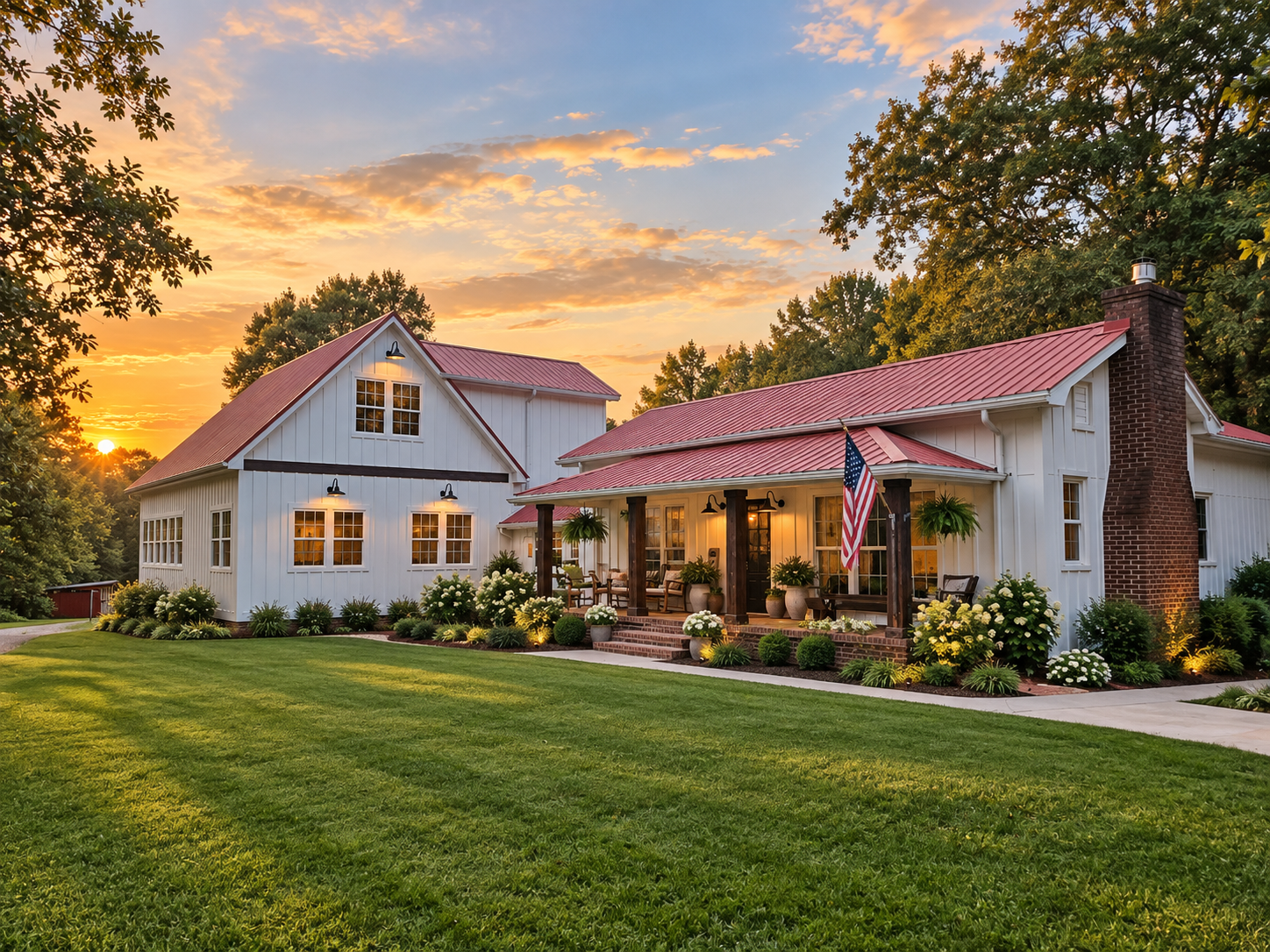
HOUSE ONE
Our First House
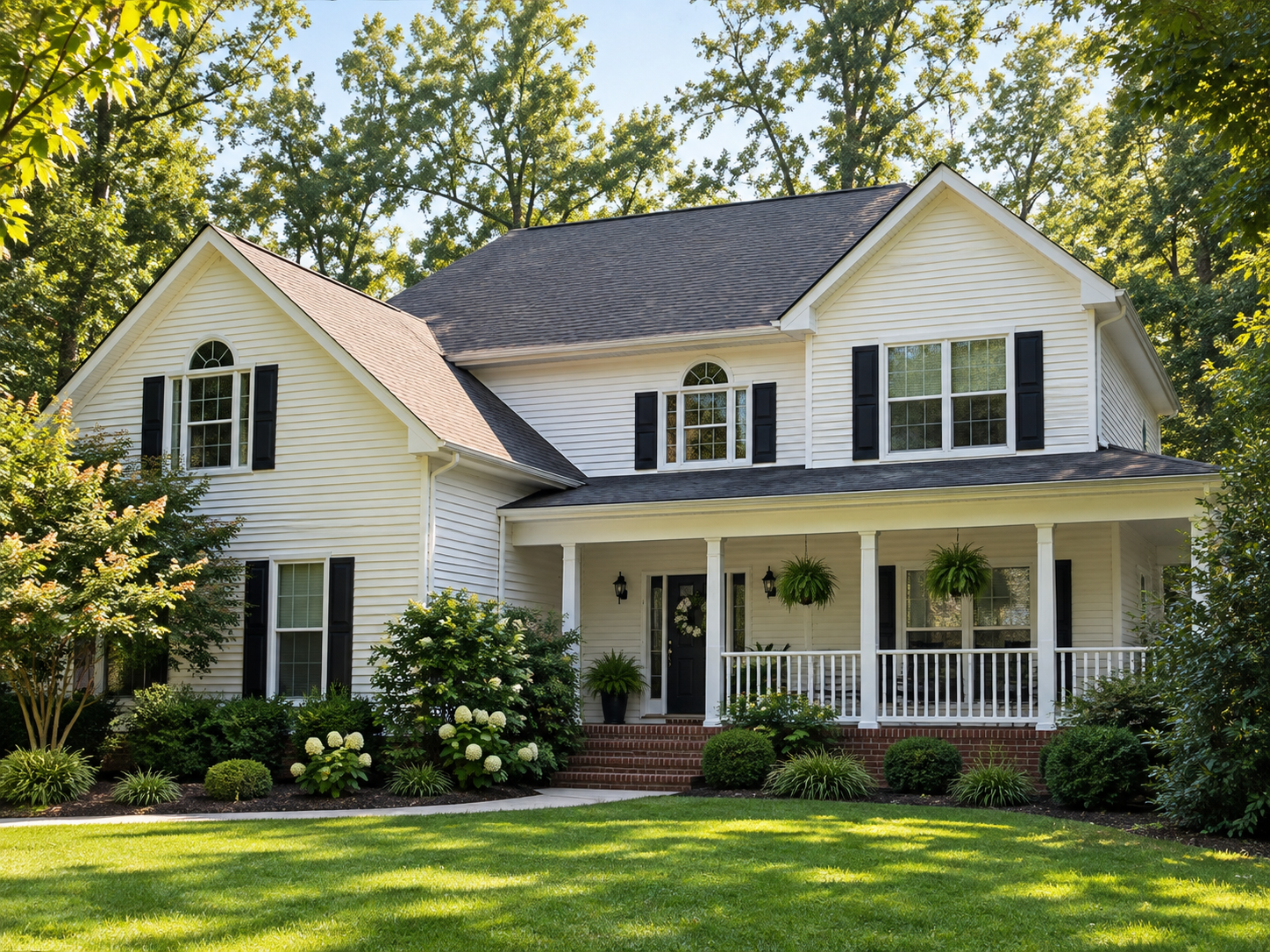
Athens, Georgia | 2001–2005
In 2001, the same year we got married, we bought our first house together on Barnett Ridge in Athens, Georgia—a white, two-story traditional on a big wooded lot along the Oconee River.
Our story with that house actually started before we owned it. One evening before closing, we stopped by the empty house. Standing on the back deck of what was about to become our first home, Joel proposed.
We were certain it was our forever house.
So we made it ours. We painted walls, converted the original garage into living space, added another garage and built a huge bonus room above it. We weren’t thinking about resale value or our next move. We were building the house around the life we thought we’d live there.
In 2003, Sophie came into our lives. Eighteen months later, Collin was born, and suddenly our home needed to function very differently.
After Collin came home from the NICU, our living room became the center of his care. My mom moved in with us and helped care for Sophie while Joel and I learned to navigate a completely unexpected new life.
That house became much more than the pretty house on the river we’d fallen in love with.
It became the place that held our family together.
By 2005, we knew that as much as we loved our home and Athens, what our family needed had changed. We needed to be closer to family, specialized medical care and the resources Collin would need as he grew.
So we sold the house we’d once thought we’d never leave and headed home to North Carolina.
A home can be beautiful. It can have the perfect lot, the hardwood floors, the big porch and all the space you thought you wanted. But what makes it the right home is how it supports the life you’re actually living inside of it.
HOUSE TWO
Coming Home
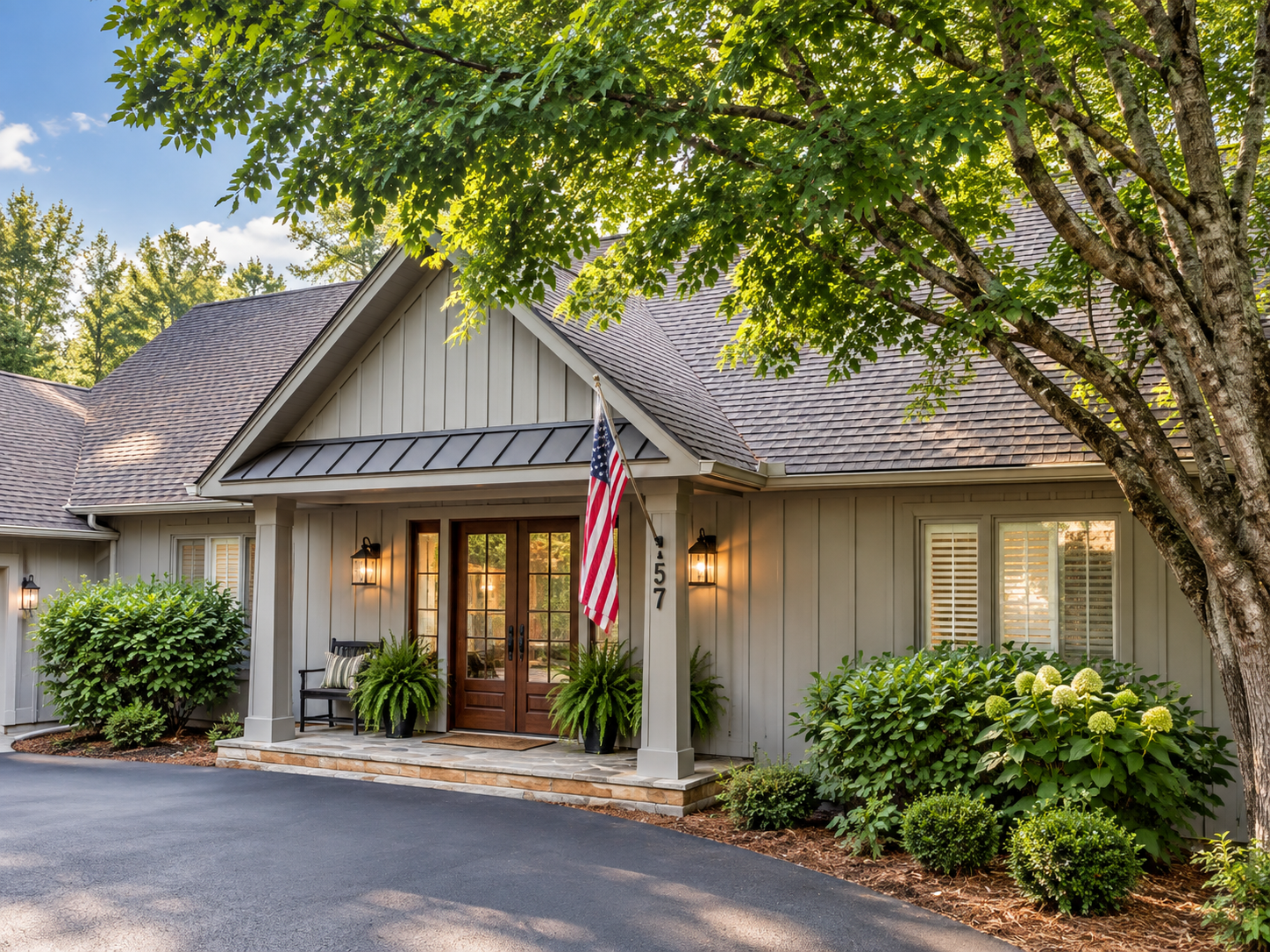
Bermuda Run, North Carolina | 2005-2006
Sometimes you can go home again—only to discover that “home” means something different when you bring a family with you.
After Collin’s successful heart surgery, we made a big decision. In the spring of 2005, we packed up our life in Georgia and moved back to North Carolina to be closer to family and the resources we needed.
And we landed somewhere very familiar.
My mom had bought this house in Bermuda Run when I was about 15 or 16. It was the house I remembered from my teenage years—a huge three-story home with a pool, dance floor, full bar, pool table and even an elevator. I had celebrated birthdays and Halloween parties there years before.
By 2005, my mom was ready to downsize. She offered us the opportunity to lease the house with the option to buy it, giving our little family a soft place to land while we figured out what came next.
And for a little while, it really did feel like coming home.
Collin celebrated his first birthday there. Sophie spent her second Halloween sitting on those front steps with a pumpkin and her older cousins—the same house where I’d celebrated Halloween as a teenager.
But as much history as I had with the house, Joel experienced it differently. To him, it still felt like my mom’s house. And at nearly 6,000 square feet, with three floors and a pool, it was far more house—and far more maintenance—than our young family needed.
We realized pretty quickly that coming home didn’t necessarily mean staying in the home I’d grown up in.
Less than a year after arriving, we decided to move again. On February 28, 2006, we closed on House Three.
House Two taught us that history can make a place meaningful, but the right home still has to fit the life you’re building now.
HOUSE THREE
Finding Our Footing
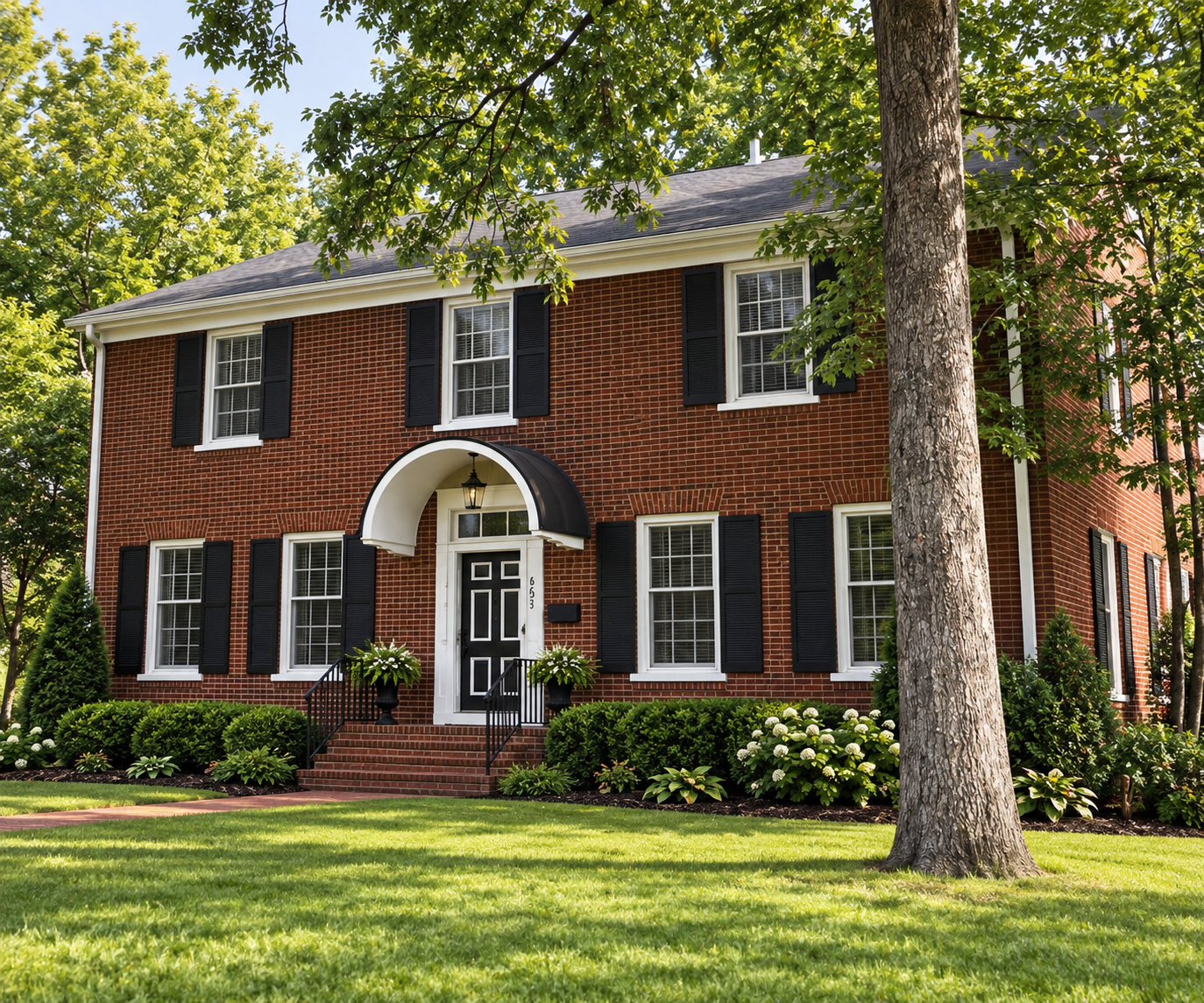
Winston-Salem, North Carolina | 2006-2008
They say real estate is all about location, location, location. For House Three, that couldn’t have been more true.
We closed on our home on Saint Claire Road on February 28, 2006. It was an older, two-story brick Colonial with plenty of character—a huge fireplace, an iron pot rack and a brick-walled backyard covered in ivy that felt a little like an English garden.
But the real reason we chose it wasn’t the house itself. It was where it was.
After years of traveling from Athens to Atlanta for specialists and emergencies, we wanted to build our life closer to the care and resources Collin needed. Saint Claire put us near Brenner Children’s Hospital and the Children’s Center, where Collin had started attending when he was just eight months old.
That school would become an incredibly important part of our lives. Collin attended until he was 11, was deeply loved there, and through it we even met two other children—and their families—with Cornelia de Lange syndrome.
Life kept growing inside House Three, too. Carson was born in April 2007, and we brought him home there. Suddenly we had three very young children under one roof.
And that’s when the house began teaching us something else.
The traditional room-by-room layout that gave the older home so much character wasn’t particularly practical for our family. With separate rooms, limited storage and small closets, it was hard to keep sight of three little kids—and there wasn’t much open space for Collin to move around in his walker. The traffic along Silas Creek Parkway didn’t help either.
We loved many things about House Three, but by early 2008, we were ready for a home that worked better for the way our family actually lived.
And that search would take us to Lewisville
House Three taught us that location can change your life—but once you’re there, the house itself still has to work for the people living inside it.
HOUSE FOUR
Room To Live
Lewisville, North Carolina | 2008-2015
By early 2008, we knew exactly what we needed from our next home: space that worked for the way our family actually lived.
House Four gave us that.
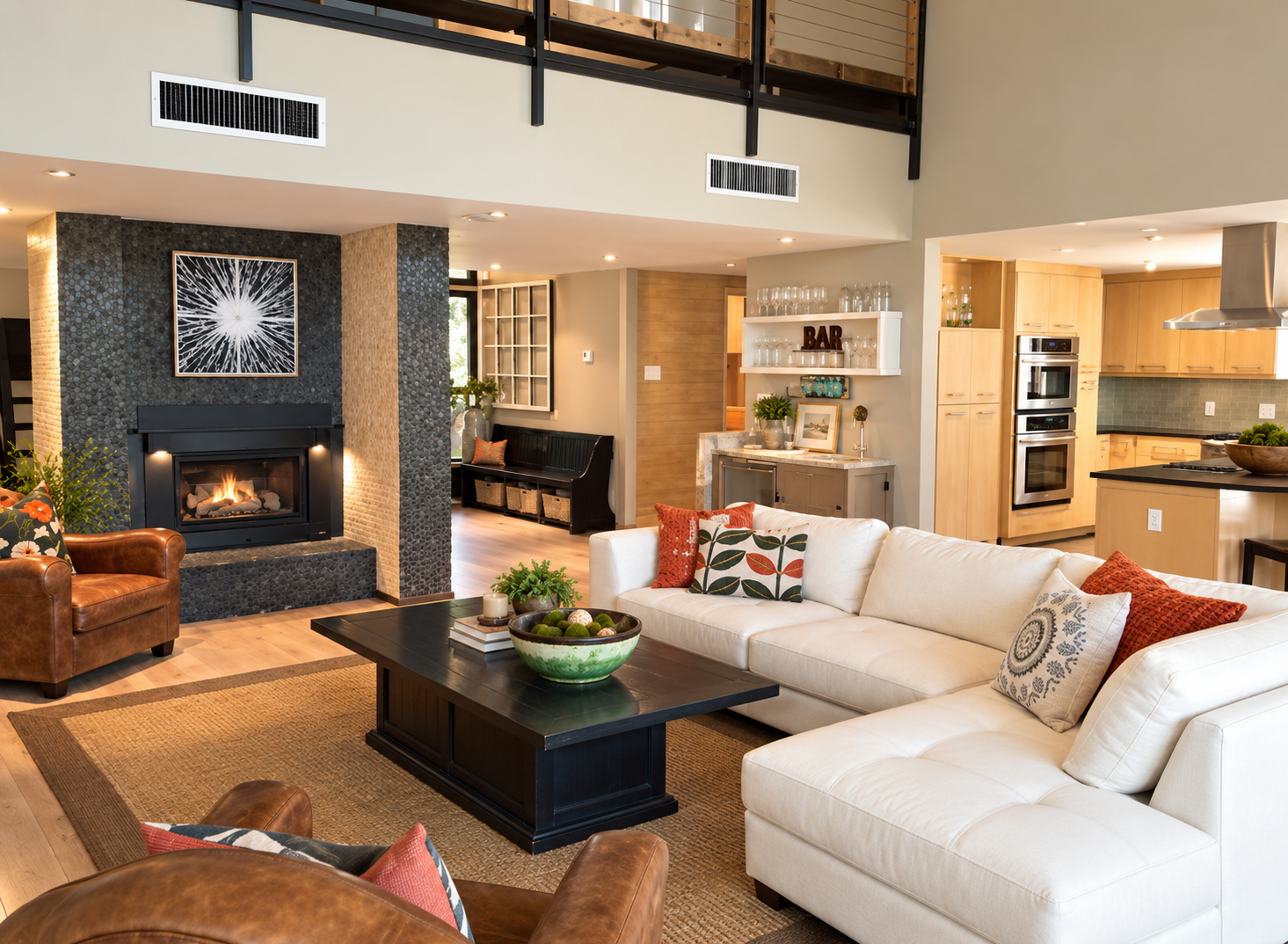
After the separate rooms and tighter spaces of our Winston-Salem house, this home felt completely different. It was open and connected, with long sight lines and room for everyone to be together without being on top of one another. With three young children—and Collin needing space to move around safely—that mattered more than we could have understood before living it.
It wasn’t a traditional house, and the exterior certainly wasn’t what made us fall in love with it. The inside was what worked. The open living spaces made everyday life easier, and for the first time we began to understand that a home’s floor plan could have as much impact on a family as its location.
And we lived a lot of life there.
Carson, who had come home from the hospital to House Three, spent most of his early childhood here. The kids grew, our routines changed, and this house carried us through seven busy years of raising a young family.
But somewhere along the way, what we wanted began to change too.
We started craving something different—more land, more privacy, more room outside. By 2015, we were ready for another chapter. We thought that chapter would begin with 20 acres and a house we planned to build.
It didn’t quite work out that way.
Instead, an unexpected turn would lead us to an old farmhouse on nine acres that wasn’t even for sale.
And eventually, to House Five: Home.
House Four taught us that the best house isn’t necessarily the prettiest one from the street. Sometimes it’s the one that simply makes everyday life work better.
HOUSE FIVE
Home
Farmington/Mocksville, North Carolina | 2015-Present
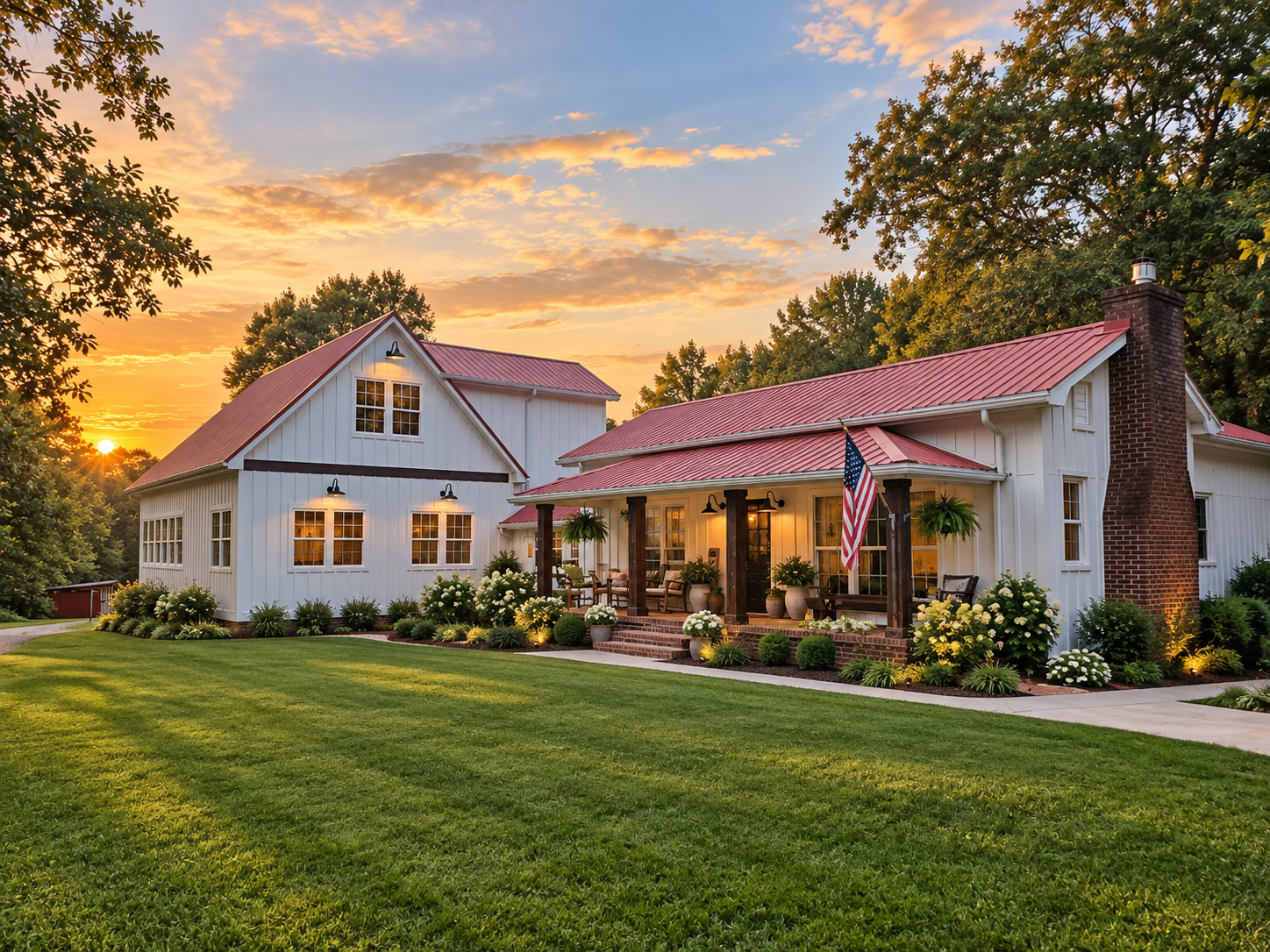
House Five wasn’t actually for sale.
After leaving Lewisville in 2015, we planned to build. We had found 20 acres, picked out a house plan and thought we knew exactly what came next.
Those plans fell through, so we changed course and started looking for an existing home with some land.
And then, of all places, we walked into Lowe’s.
A chance conversation with someone we knew led us to an old farmhouse on nine acres whose owners were planning to move. The house wasn’t listed. There was no For Sale sign. But we went to see it anyway.
The house itself needed work. But Joel walked the property—the pasture, the creek, the woods—and saw what it could become.
So in the fall of 2015, House Five became ours.
Built in 1903, it had already lived a lot of life before we ever arrived. Over the years, we began making it fit ours.
We renovated. Then renovated some more. We added a large addition that gave our family the space we needed and made the old farmhouse work for this stage of our lives. We added the pool and pool house. We redid the kitchen—and then, thanks to a water issue, got the unexpected opportunity to do it again.
Little by little, the house changed.
But so did we.
The little kids from those earlier houses grew up here. Bedrooms changed. Cars filled the driveway. Friends came and went. Graduations happened. Our family expanded beyond the five people who originally moved in.
And somewhere along the way, this old farmhouse stopped feeling like another house in our story.
It became home.
We’ve now lived here longer than we’ve lived anywhere else. And when we look back at all five houses, we can see that each one gave us something we needed at the time.
The first gave us a beginning.
The second taught us that plans can change.
The third showed us how much location can matter.
The fourth taught us how important it is for a house to work for the people living inside it.
And House Five taught us something different:
Home isn’t something you find perfectly finished and waiting for you. Sometimes you grow into it, change it, add to it—and somewhere along the way, it becomes part of your family’s story.
Five homes. One story. And a whole lot of life lived in between.